The Damage Beef Creates on the Environment
We take a look at whether eating meat is bad for you or the surroundings and how yous tin brand your nutrition more sustainable.
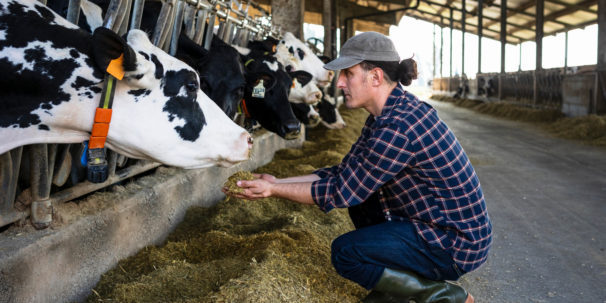
Our diets play a pregnant office in areas such as our culture, amusement, and wellbeing. We have more than choice than ever before about how and what we consume, yet a growing population means extra resources are needed. But does that mean that eating meat is bad for the environs?
Nosotros look at how the global meat industry impacts the planet and some of the arguments for and confronting eating meat. We explore whether it'due south bad for you and the environment and some alternatives to eating meat.
A brief history of meat-eating
When did humans start eating meat? It's a question that anthropologists have been exploring for many years at present. Past studying the teeth of human ancestors known as hominins and the cut marks on the bones of big herbivores, experts advise that human ancestors began eating meat in their diet around 2.6 million years ago.
While these ancient ancestors were near likely scavenging for meat rather than hunting for information technology, it's thought that the free energy-rich protein source played an essential part in our evolution. Our modern brains require a lot of energy, and some experts suggest that meat played a part in boosting our energy intake, helping our brains evolve to be bigger and more than complex.
Eating meat also meant changes in the digestive tract. Over hundreds of thousands of years, the gut shrunk in human ancestors, meaning more energy was available for the brain. Cooking, a practice that dates back at least 800,000 years, made meat more digestible.
By the fourth dimension Homo Sapiens emerged effectually 300,000 years agone, hunting and gathering were common. Our ancestors connected to eat meat, plants, basics, pulses and fruits, until the introduction of agriculture, roughly 10,000 years ago. This was when we switched to a more than narrow diet of cultivated wheat, barley, oats, rice or corn, depending on location.
Meat became a luxury in many cultures, but enjoyed on special occasions. However, in modern times, it tin be found in affluence around the world. In 2019 alone, an estimated 325 million metric tons of meat was produced.
Arguments for and against eating meat
Our diets are a highly personal thing. However, information technology tin also be something that we have for granted. Often, this leads to quite big differences in stance and controversies , peculiarly on the subject of meat consumption.
Should we finish eating meat altogether? Or are in that location benefits of eating meat? There are rarely unproblematic answers to such questions, and there are arguments for eating meat and those against information technology. Beneath, we've briefly looked at some of these arguments:
Arguments for eating meat
The bulk of the world's population eats meat of some kind. A 2018 global survey past market place enquiry specialist Ipsos found that 73% of the world's population was omnivorous, regularly eating both animal and non-animal products. Here are some of the arguments for eating meat:
- The nutritional value . As our open step on livestock farming and the environment outlines, meat is rich in protein, amino acids and several essential micronutrients. The EAT-Lancet Commission found that meat and dairy can found of import parts of the diet but in significantly smaller proportions than whole grains, fruits, vegetables, nuts and legumes.
- Civilization and lodge . Animals are ofttimes used as crucial assets and investments in developing countries. They can exist a vital function of the economic system, peculiarly in highly rural communities.
- Country usage . Ruminants, grazing animals such as sheep and cows, have evolved to live on marginal lands which are otherwise useless for agriculture. They also largely swallow a establish that cannot exist eaten by humans– grass.
Arguments against eating meat
Although diets based on animal products are popular, there is a rising number of those who choose not to swallow meat, fish, dairy and eggs. In the Great britain alone, information from 2018 showed that there were 600,000 vegans in the country, up from around 150,000 in 2006. There are plenty of reasons against meat consumption:
- Health risks . Diets loftier in red and processed meats, high-fat dairy foods, processed foods, and sugar are associated with diabetes, cardiovascular disease, and cancers . Diets rich in fibre, fruit, and vegetables are associated with a reduced risk of these diseases.
- Animate being welfare . The bulldoze towards lower-cost meat and milk is leading to intensive farming. To maintain low running costs, some farming practices restrict animate being behaviour and compromise their health and welfare .
- Sustainability . A 2020 report from IDTechEx found that the meat industry is unsustainable , since animal livestock uses a unduly large amount of state. Despite using 77% of agricultural country, merely 17% of global caloric consumption comes from animals.
- Environmental impacts . Every bit outlined in our open step on controversies in the food system , livestock production methods are considered one of the main drivers of environmental damage, including climate change and biodiversity loss.
The ecology impact of eating meat
The last ii points in our list of the pros and cons of eating meat have had particular attention in recent years. With problems of climate change and sustainability becoming increasingly urgent, many experts advise us to try and limit our consumption of meat. So what is the environmental affect of eating meat?
In reality, several factors related to the product of meat contribute to its global environmental impact. We've highlighted some of these below:
Deforestation
The production of meat is, directly and indirectly, related to the loss of forests in South America. According to the WWF, beef and soy production are responsible for deforestation in the Amazon Rainforest and other areas of Brazil, Argentina and Paraguay.
Vast swathes of the Amazon are being cleared of habitat for cattle farming and the production of soybean for animal feed. Oftentimes, deforested areas are cleared using fire . This burning releases huge amounts of carbon dioxide (CO2) into the temper while as well removing a CO2 sink.
Biodiversity loss
It's not just forests that are in danger from the meat industry. Every bit state is repurposed to raise animals and abound soybean, many habitats are destroyed or impacted. Many species face extinction or are under threat due to the destruction of natural environments.
Estimates suggest that around half of the planet's habitable land is used for agriculture , with roughly 77% of this used by grazing cattle, sheep, goats, and other livestock. Yous tin can larn more about environmental and wildlife conservation with our complimentary online course.
Greenhouse gas emissions
Meat consumption is responsible for releasing greenhouse gases such as methane, CO2, and nitrous oxide. These gases contribute to climatic change, such as global warming. Livestock farming contributes to these greenhouse gases in several ways:
- The destruction of forest ecosystems . As mentioned above, this procedure releases enormous amounts of CO2 into the temper.
- Raising livestock . Animals such every bit cows and sheep create big amounts of methane as they digest food.
- Decaying manure . The manure that ruminant animals produce also releases methane.
- Fertiliser use . Many fertilisers used in soybean product are nitrogen-based, and these produce nitrous oxide emissions.
Water usage
It takes a lot of water to produce meat, and beef is the most water-intensive food. It requires 2 times more than water to produce beef than pork and 4 times more than alternative poly peptide sources such as lentils.
The issue is farther compounded because soybean farming (for animal feed) is relatively inefficient when it comes to water usage. Livestock production also contributes to water pollution around the world because manure contaminates watercourses.
Y'all tin can learn more well-nigh the connection between life and the Earth'due south diverse systems and proceeds new insights into the natural environment with our online course.
Soil degradation
Raising animals oft requires a lot of grazing land. However, the intensive nature of this grazing tin can lead to blank soil, which is and then oft lost due to wind or rain. As a effect, fertile lands go barren, waterways become clogged, and in that location is an increased gamble of flooding.
Soil is also a large reservoir for carbon, absorbing it as plants and trees die. Equally soil is lost, it releases that carbon as CO2 into the atmosphere. Fauna agronomics, deforestation, and other land-use changes that reduce soil accept been the 2d-largest contributors to CO2 emissions globally.
Notice the importance of soil and how our activities impact it with our gratuitous form, Soil & the World Beneath Our Feet.
Climatic change
Ultimately, the factors that we've outlined so far contribute to climatic change.
According to the UN'south Food and Agricultural Organisation, the meat and dairy industry accounts for roughly 14.five% of global greenhouse gas emissions. As we explored in our postal service on reducing your carbon footprint , the link between carbon emissions and climate change is undeniable.
Is eating meat bad for the planet?
The evidence above all seems fairly conclusive, and in that location is plenty of scientific discipline and research to back it upwardly. The scale and intensity of meat production, combined with projected population growth estimates, shows that current practices are bad for the environs.
Should I stop eating meat and so?
At that place is no precise answer to this question. Information technology ultimately comes down to your personal selection. While we've covered a lot of the environmental factors related to eating meat, we oasis't looked in whatsoever great item about the upstanding and cultural elements.
However, several reports and studies, such every bit the Intergovernmental Console on Climatic change (IPCC) special report on climatic change and land , recommend reducing meat consumption.
Although experts involved with the study don't desire to tell people what to eat, they do highlight that "information technology would indeed be beneficial, for both climate and homo health, if people in many rich countries consumed less meat, and if politics would create appropriate incentives to that effect".
So, although individual choice plays a significant role in reducing meat consumption, information technology is also the responsibility of governments and organisations to make policy changes.
What kind of diet is best for the environment?
As nosotros explored in our post on how to build a sustainable nutrition , at that place are quite a few suggestions as to what a sustainable diet includes. Notwithstanding, by and large, information technology relates to the type of food nosotros swallow, as well as how it's grown, distributed, and packaged.
The FAO and WHO highlights that a sustainable diet has several notable features:
- Includes wholegrains, legumes, nuts and an abundance and variety of fruits and vegetables
- Can include moderate amounts of eggs, dairy, poultry and fish, and small amounts of red meat
- Minimises the utilize of antibiotics and hormones in food production
- Minimises the use of plastics and derivatives in nutrient packaging
- Reduces food loss and waste matter
Other experts, such every bit the Consume Forum, suggest that our diets should shift towards flexitarian. This ways that individuals should swallow more vegetarian foods, with pocket-size amounts of fish and meat. For eating meat, a general guideline is i beef burger a week or one large steak a month .
So, at a time where nosotros're all having to face up to a climate emergency, eating less meat could undoubtedly help. With our form on the hereafter of food and sustainability , you tin learn more than about how we tin all eat more sustainably.
Alternatives to meat
As we've already established, meat tin can provide protein, amino acids and several essential micronutrients to our diets. So if nosotros're reducing consumption, what are some alternatives to meat? Every bit we explore in our open step on the pros and cons of culling proteins , there are several options:
- Found-based proteins . Foods such as quinoa, soy, seitan, walnut, and amaranth can provide a rich source of protein and other nutrients.
- Algae . With algae, we become a good source of poly peptide and polyunsaturated fatty acids and fibre. It's besides rich in vitamin B12. Information technology also has a higher yield per unit surface area than other high-protein crops.
- Insects . Edible insects are not only a healthy source of protein and minerals, but their commercial production has a much lower impact on the surroundings than meat in terms of greenhouse gas emission and water consumption.
- Cultured meat . Meat produced past in vitro cell culture of brute cells could be a food of the future. It uses less state and water and reduces the need for grazing livestock. The nutritional content can exist tailored, food-borne diseases can be eliminated, and fewer antimicrobials are needed.
Of course, none of these alternatives come without potential downsides. Some product processes haven't been tested on a larger scale, and the cost and health implications aren't fully understood.
If you're looking to discover out more than about what a salubrious diet looks like, our course on nutrition and cooking provides further information.
Final thoughts
As nosotros've seen, eating meat is bad for the surroundings at the scale and intensity we collectively are. By damaging ecosystems and releasing greenhouse gases, the global meat industry is contributing to climate alter. What's more, with the world'south population predicted to continue growing, we will need to feed more than and more people. The touch of meat on the surround is non currently sustainable.
By reducing the amount of meat we consume and striving for a more sustainable diet, we tin can each assistance to reduce the damage to the environment. And, while in that location are pros and cons of eating meat, more than people are choosing to cut it out entirely. Every bit new engineering science and legislation are introduced, we tin can all make a difference in protecting the planet with our dietary choices.
Source: https://www.futurelearn.com/info/blog/eating-meat-bad-for-environment
0 Response to "The Damage Beef Creates on the Environment"
Post a Comment