Is Bside Going to Open Again
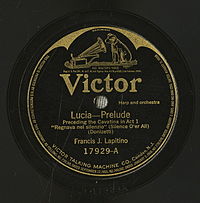
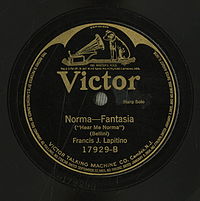
The A-side and B-side are the two sides of phonograph records and cassettes; these terms have often been printed on the labels of two-sided music recordings. The A-side usually features a recording that its artist, producer, or record company intends to be the initial focus of promotional efforts and radio airplay and hopefully go a hit record. The B-side (or "flip-side") is a secondary recording that typically receives less attention, although some B-sides have been every bit successful as, or more than so than, their A-sides.
Utilize of this language has largely declined in the 21st century as the music industry has transitioned abroad from analog recordings towards digital formats without physical sides, such as CDs, downloads and streaming. Nevertheless, some artists and labels continue to apply the terms A-side and B-side metaphorically to describe the type of content a item release features, with B-side sometimes representing a "bonus" runway or other material.[one] The term B-side carries a more than expansive definition in the K-pop industry, referring to all tracks on an album that are not marketed as title tracks.[ii]
History [edit]
The first sound recordings were produced in the late 19th century using cylinder records, which held approximately two minutes of audio stored upon a unmarried round surface. One-sided disc records made of shellac co-existed with cylinders and had a similar capacity. In 1908, Columbia Records introduced double-sided recordings with one choice on each side in European markets. Although cylinders and discs remained comparable and competitive for a time (by 1910, both media were able to hold between 3 and 4 minutes of sound), discs ultimately superseded the cylinder format, rendering it obsolete past 1912, largely due to its shorter play times. By the mid-1920s, double-sided shellac discs playing at 78 rpm (and known as "78s") had become an manufacture standard.
Record producers did not initially have reason to value either side of double-sided records as existence more than of import than the other. There were no tape charts until the 1930s, and most radio stations did not broadcast recorded music until the 1950s, when the Top 40 radio format overtook full-service network radio. In June 1948, Columbia Records introduced the modern 33 1⁄3 rpm long-playing (LP) microgroove vinyl record for commercial sales, and its rival RCA Victor, responded the next twelvemonth with the 7-inch 45 rpm vinylite record, which would quickly replace the 78 for single tape releases. The term "single" came into popular use with the advent of vinyl records in the early on 1950s. During this period, most record labels would designate one song an A-side and the other a B-side at random. (All records accept specific identifiers for each side in addition to the catalog number for the record itself; the "A" side would typically be assigned a sequentially lower number.) Nether this random organization, many artists had so-called "double-sided hits", where both songs on a record made i of the national sales charts (in Billboard, Cashbox, or other magazines), or would exist featured on jukeboxes in public places.
Conventions shifted in the early 1960s, at which point tape companies started assigning the song they wanted radio stations to play to side A, as 45 rpm single records ("45s") dominated most markets in terms of cash sales in comparison to albums, which did not fare every bit well financially. Throughout the decade the manufacture would slowly shift to an album-driven paradigm for releasing new music; information technology was not until 1968 that the total product of albums on a unit basis finally surpassed that of singles in the United Kingdom.[3] In the tardily 1960s, stereo versions of pop and rock songs began appearing on 45s. However, since the majority of the 45s were played on AM radio stations that were not notwithstanding equipped for stereo broadcast, stereo was not a priority. Notwithstanding, FM rock stations did not like to play monaural content, then the record companies adopted a protocol for promotional recordings for disc jockeys with the mono version of a song on one side and a stereo version of the aforementioned song on the other. By the early 1970s, album sales had increased and double-sided striking singles had get rare. Tape companies started to utilise singles equally a ways of promoting albums; they oft placed album tracks that they wished to promote on side A and less accessible, non-album, instrumental songs on side B. In society to ensure that radio stations played the side that the tape companies wanted to promote, they oftentimes marked one side of a record's label as a "plug side".
The distinction between the ii sides became less meaningful afterwards the introduction of cassettes and meaty disc singles in the belatedly 1980s when 45 rpm vinyl records began to decline. At first, cassette singles would often take one song on each side, matching the arrangement of vinyl records. Somewhen though, cassette maxi-singles containing more than than two songs became more than pop. As the one-sided audio meaty disc became the dominant recording medium in the late 1990s, cassettes began vanishing and the A-side/B-side dichotomy became well-nigh extinct. The term "B-side" continued to enjoy varying levels of employ in reference to the "bonus" tracks or "coupling" tracks on a CD single.
In the following decades, the manufacture largely shifted away from physical media towards digital music distribution formats, further diminishing the relevance of terminology or marketing strategies based on "sides". Today, companies label non-album songs and tracks deemed less desirable or marketable using terms such equally "unreleased", "bonus", "non-album", "rare", "outtakes", or "sectional". Such material is sometimes grouped for downloading or streaming together into "bonus" or "extended" versions of an artist's albums on digital music platforms.
Significance [edit]
B-side songs may be released on the aforementioned record as a single to provide extra "value for money". There are several types of material commonly released in this way, including a dissimilar version (e.g., instrumental, a cappella, live, acoustic, remixed version or in some other language), or, in a concept tape, a song that does not fit into the story line.[ citation needed ]
Additionally, information technology was mutual in the 1960s and 1970s for longer songs, especially by soul, funk, and R&B acts, to be broken into two parts for single release. Examples of this include Ray Charles'southward "What'd I Say", the Isley Brothers' "Shout", and a number of records by James Brown, including "Papa's Got a Make New Bag" and "Say It Loud - I'm Black and I'thousand Proud". Typically, "office one" would be the nautical chart hitting, while "part two" would exist a continuation of the same performance. A notable case of a not-R&B striking with ii parts was the single release of Don McLean'south "American Pie". With the advent of the 12-inch single in the late 1970s, the function ane/part two method of recording was largely abandoned. Modern-twenty-four hour period examples include Fall Out Boy's EP My Centre Will Ever Exist the B-Side to My Tongue and My Chemical Romance's The Black Parade: The B-Sides.
Since both sides of a single received equal royalties, some composers deliberately bundled for their songs to exist used as the B-sides of singles by popular artists. This became known as the "flipside racket".[ citation needed ] Similarly, it has likewise been alleged that owners of pirate radio stations operating off the British coast in the 1960s would buy the publishing rights to the B-sides of records they expected to be hits, and and so plug the A-sides in the hope of driving up sales and increasing their share of the royalties.[ citation needed ]
Occasionally, the B-side of a single would go the more popular song. This sometimes occurred because a DJ preferred the B-side to its A-side and played it instead. Some examples include "I Will Survive" by Gloria Gaynor (originally the B-side of "Substitute"), "Water ice Ice Baby" by Vanilla Ice (originally the B-side of "Play That Funky Music"), "I'll Be Effectually" by the Spinners (originally the B-side of "How Could I Let You lot Become Away") and "Maggie May" by Rod Stewart (originally the B-side of "Reason to Believe"). Probably the well-nigh well-known of these, however, is "Stone Effectually the Clock" by Neb Haley & His Comets (originally the B-side of "13 Women (And Only 1 Man in Town))".
The vocal "How Soon Is Now?" past the Smiths started out equally the extra track on the 12-inch of "William, It Was Really Cypher" just subsequently gained a split release as an A-side in its own right, as did Oasis's "Acquiesce", which originally appeared as a B-side of "Some Might Say" in 1995, simply gained subsequent release in 2006 every bit part of an EP to promote their forthcoming compilation album Stop the Clocks. Feeder in 2001 and 2005 had the B-sides "Just a Twenty-four hour period" from "7 Days in the Sunday", and "Shatter" from "Tumble and Fall", released as A-sides subsequently fan petitions and official website and fansite message board hype; they charted at No. 12 and No. 11 in the Uk. In 1986, "Grass", the first single from XTC'south album Skylarking, was eclipsed in the U.S. by its B-side, "Honey God" – so much then that the record was near immediately re-released with i song ("Mermaid Smiled") removed and "Beloved God" put in its place, the replacement becoming one of the ring'due south better-known hits.
On many reissued singles, the A- and B-sides are two hit songs from different albums that were not originally released together, or fifty-fifty that are by entirely different artists. These were oftentimes made for the jukebox – for one tape with two popular songs on it would make more money – or to promote one creative person to the fans of another. It has even come almost that new songs have been relegated to B-side status: for example, in 1981 Kraftwerk released their new single "Calculator Love", its B-side being "The Model", from the band's 1978 album The Man-Automobile. With synthpop increasingly dominating the U.k. charts, the single was re-released with the sides reversed. In early on 1982 "The Model" reached number one.
Double A-side [edit]
A "double A-side", "AA-side", or "Dual single" is a single where both sides are designated the A-side, with no designated B-side; that is, both sides are prospective hitting songs and neither side will be promoted over the other. In 1949, Savoy Records promoted a new unmarried by one of its artists, Paul Williams' "Business firm Rocker" and "He Knows How to Hucklebuck", as "The New Double Side Hit – Both Sides "A" Sides".[iv] In 1965, Billboard reported that due to a disagreement between EMI and John Lennon about which side of the Beatles' "We Can Work It Out" and "Day Tripper" unmarried should be considered the A-side and receive the plugging, "EMI settled for a double-side promotion entrada—unique in Britain."[five] They connected to use the format for the release of the singles "Eleanor Rigby" and "Yellow Submarine" in 1966, followed by "Strawberry Fields Forever" / "Penny Lane" in 1967 and "Something" / "Come Together" in 1969. Other groups followed conform, notably the Rolling Stones in early 1967 with "Permit's Spend the Night Together" / "Ruby Tuesday" as a double-A unmarried.[ citation needed ]
A double-A-sided unmarried is often confused with a single where both sides, the A and the B, became hits. Although many artists in the tardily 1950s and early 1960s, including Elvis Presley, the Everly Brothers, Fats Domino, Ricky Nelson, the Beach Boys, Brenda Lee, and Pat Boone, routinely had hit singles where both sides of the 45 received airplay, these were not double A-sides. The charts below tally the instances for artists' singles where both sides were hits, not where both sides were designated an A-side upon manufacture and release. For example "Don't Be Cruel", the B-side of "Hound Domestic dog" by Elvis Presley, became every bit large a striking as its A-side even though "Don't Exist Cruel" was not the intended A-side when released in 1956. Reissues later in the 1960s (and afterward the Beatles' "24-hour interval Tripper"/"We Can Work It Out") listed the single with both songs equally the A-side. Also, for Cliff Richard'south 1962 "The Next Time"/"Available Boy", both sides were marketed as songs with chart potential, albeit with "Bachelor Boy" pressed every bit the B-side.
In the UK, earlier the appearance of digital downloads, both A-sides were accredited with the same chart position, for the singles chart was compiled entirely from physical sales. In the United kingdom of great britain and northern ireland, the biggest-selling non-charity single of all time was a double A-side, Wings' 1977 release "Mull of Kintyre"/"Girls' Schoolhouse", which sold over ii million copies. It was also the Uk Christmas No. 1 that twelvemonth, 1 of simply four occasions on which a double A-side has topped that chart, the others being Queen's 1991 re-release of "Maverick Rhapsody" with "These Are the Days of Our Lives", Westlife's 1999 release "I Accept a Dream"/"Seasons in the Sun", and The Beatles' aforementioned "Day Tripper"/"We Can Work It Out" in 1965.[six] [7] Nirvana released "All Apologies" and "Rape Me" every bit a double A-side in 1993, and both songs are accredited as a hit on both the United kingdom of great britain and northern ireland Singles Chart,[8] and the Irish Singles Chart.[9]
Occasionally double-A-sided singles were released with each side targeting a different market. During the late 1970s, for example, Dolly Parton released a number of double-A-sided singles, in which i side was released to pop radio, and the other side to country, including "Two Doors Down"/"It's All Wrong, Only It's All Right" and "Babe I'k Burnin'"/"I Really Got the Feeling". In 1978, the Bee Gees also used this method when they released "Likewise Much Sky" for the pop market and the flip side, "Rest Your Beloved on Me", which was aimed toward country stations.
Last double-sided hits [edit]
In the Us: Elton John's "Candle in the Wind '97" / "Something About the Way Y'all Look Tonight" was the last double-sided single to reach the Number 1 spot and the Superlative ten every bit well.
In the United kingdom of great britain and northern ireland: McFly's "Babe's Coming Back/Transylvania" was the last double-sided single to achieve the Number 1 spot, and Leona Lewis's "Better in Time" / "Footprints in the Sand" was the concluding one to accomplish the tiptop 10.
Artists With The Most Top 100 Double Side Singles [edit]
| Artist | Number |
|---|---|
| Elvis Presley | 51 |
| The Beatles | 26 |
| Fats Domino | 24 |
| Pat Boone | 21 |
| Ricky Nelson | 19 |
| Nat King Cole | 19 |
| Brenda Lee | sixteen |
| Ray Charles | 16 |
| Connie Francis | 13 |
| The Everly Brothers | 13 |
| Perry Como | 12 |
| Beck Benton | 12 |
| Aretha Franklin | xi |
| Sam Cooke | eleven |
| The Platters | x |
| Jackie Wilson | 10 |
| The Embankment Boys | viii |
| Creedence Clearwater Revival | 7 |
| Bill Haley & His Comets | 6 |
| Johnny Mathis | 6 |
| The Rolling Stones | six |
| The Monkees | 6 |
- Perry Como (12) and Nat King Cole (19) both had boosted double-sided singles on Billboard 's pre-1955 charts.[ten] [11]
Artists having the most U.s.a. double-sided singles on which each side reached the Billboard Meridian xl, according to Billboard:[xi]
| Artist | Number |
|---|---|
| Elvis Presley | 26 |
| The Beatles | fourteen |
| Ricky Nelson | xi |
| Pat Boone | x |
| Fats Domino | 9 |
| Brenda Lee | 6 |
| Connie Francis | six |
| Everly Brothers | 6 |
| Perry Como | vi |
| Creedence Clearwater Revival | 6 |
| Nat King Cole | 5 |
| The Beach Boys | 5 |
Humorous implementations [edit]
The concept of the B-side is and so well known that many performers take released humorous versions or commentary on the phenomenon, such as Paul and Linda McCartney's B-side to Linda McCartney'due south "Seaside Woman" (released under the allonym Suzy and the Red Stripes) which is titled "B-Side to Seaside"; Blotto'due south 1981 single "When the Second Feature Starts" that features "The B-Side", a song almost how bad B-sides are compared to A-sides; 3 Domestic dog Nighttime's 1973 single "Shambala" with "Our 'B' Side", well-nigh the grouping wishing they could be trusted to write their own songs for single release; and the B-side of George Harrison'south "I Don't Care Whatsoever More", which starts with Harrison maxim, "We got a B-side to brand, ladies and gentlemen so we meliorate get on with it." During the 1970s, Barry White devoted many of his B-sides to instrumentals in which the titles were variations of those for songs done in song course on the A-side, including "Just a Little More than Baby" (B-side of "I'm Gonna Beloved You lot Just a Little More Baby"), "No, I'm Never Gonna Requite Ya Up" (B-side of "Never Never Gonna Give Ya Up"), "Only Non Enough" (B-side of "Tin can't Get Enough of Your Beloved, Babe"), "What Am I Gonna Practise With You Baby" (B-side of "What Am I Gonna Do With Yous"), "More Than Annihilation, Yous're My Everything" (B-side of "You're The Get-go, The Last, My Everything"), "Anything You Want Me To" (B-side of "I'll Practice for Y'all Annihilation You Want Me To"), and "Tin can't You Come across It'due south Only You lot I Want" (B-side of "Don't Brand Me Wait Too Long"). The original cassette version of In God We Trust, Inc. compiled all 8 songs on Side A and left Side B intentionally devoid of whatsoever sound. Printed on the cassette's 2nd side was the explanation, "Abode taping is killing record manufacture profits! We left this side blank and so you can help."[12]
B/W [edit]
The term "b/westward", an abbreviation of "backed with", is often used in listings to bespeak the B-side of a record. The term "c/w", for "coupled with", is used similarly.[13]
B-side compilations [edit]
Encounter also [edit]
- B movie
References [edit]
- ^ Plasketes, George (28 Jan 2013). B-Sides, Undercurrents and Overtones: Peripheries to Popular in Music, 1960 to the Present. Ashgate Publishing.
- ^ "These Were The Elevation fifty+ Best Thou-Pop B-Sides In 2020, Co-ordinate To Fans". Koreaboo. 25 January 2021. Retrieved 27 July 2021.
- ^ MacDonald, p. 296
- ^ Billboard (25 June 1949). "Rhythm & Blues Records". Billboard. Vol. 61, no. 26. p. thirty. ISSN 0006-2510.
Savoy and Paul Williams Lead Again with... The New Double Side Hit – Both Sides 'A' Sides
- ^ Hutchins, Chris. "Music Capitals of the World" Billboard Dec 4, 1965: 26
- ^ 1977-12-24 Peak twoscore Official U.k. Singles Archive | Official Charts
- ^ "Every Official Christmas Number 1 always". Official Charts Company. 25 December 2020. Archived from the original on 3 April 2015.
- ^ Nirvana – UK Singles Nautical chart Archive officialcharts.com. Retrieved 23 October 2013.
- ^ User needs to do an artist search for "Nirvana" irishcharts.ie. Retrieved 23 Oct 2013.
- ^ Whitburn, Joel, Pop Memories 1890–1954, Record Inquiry Inc., 1986
- ^ a b Whitburn, Joel, Summit Popular Singles 1955–2006, Record Enquiry Inc., 2007
- ^ sharky_p2p No real name given + Add Contact (four May 2008). "kennedys | Flickr - Photo Sharing!". Flickr. Retrieved 24 February 2012.
- ^ "The Directly Dope: In the tape business organization, what do "b/westward" and "c/w" mean?". 15 October 1999. Retrieved 12 January 2009.
- Other sources
- MacDonald, Ian. Revolution in the Head: The Beatles' Records and the Sixties – ISBN i-84413-828-3
- "A History of the 45rpm tape" Martland, Peter. EMI: The Kickoff 100 Years – ISBN 0-7134-6207-eight
Source: https://en.wikipedia.org/wiki/A-side_and_B-side
0 Response to "Is Bside Going to Open Again"
Post a Comment